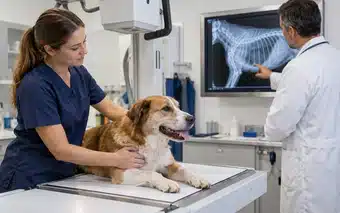
Exam
Policy question
Are exam or consultation fees included or excluded?
Evidence to read
Covered-expense definition and exclusions

Coverage is determined by the policy and the reason for the service, not by a broad “medical care” label.
Use these checkpoints to frame the literal question before reading the full guide.
Pet health insurance can cover eligible veterinary expenses for accidents or illnesses when the policy says the condition and service qualify. The same policy may exclude preventive care, non-covered fees, pre-existing conditions or other listed expenses. To answer a real coverage question, identify the veterinary event, then match each invoice item to the current policy, endorsements and benefit schedule.
The sections below show how to verify the answer and what can change it.
Imagine a pet arrives with sudden vomiting. The visit may include an exam, bloodwork, abdominal imaging, injectable medication and a prescription. “Does the plan cover vomiting?” is too broad to decide the claim. The contract may evaluate the underlying illness and each expense category separately, while the medical record shows when the signs began. The useful question is which line items remain eligible after the policy’s definitions and exclusions are applied.

| Invoice item | Policy question | Evidence to read |
|---|---|---|
| Exam | Are exam or consultation fees included or excluded? | Covered-expense definition and exclusions |
| Diagnostic testing | Is testing for this eligible condition within the benefit? | Illness/accident benefit plus diagnostic wording |
| Medication | Are prescribed drugs eligible for this event? | Medication or pharmacy provision |
| Follow-up visit | Does the policy treat rechecks the same as the initial visit? | Benefit wording, limits and claim instructions |
“Accident and illness,” “dental,” “rehabilitation,” or “wellness” are category labels. The issued policy still decides which services, conditions and charges fit inside the category.
Confirm the policy was active for the pet on the date relevant to the event.
Identify when the first signs or symptoms appeared, not only when the final diagnosis was written down.
Match the diagnosis or incident to the applicable accident or illness language.
Match each invoice line to an eligible-expense category and any exclusion.
Apply deductible, reimbursement and limits only after the expense survives the coverage review.
Keep policy terms, deductible, reimbursement and limits beside the quote so the comparison stays consistent.
Routine exams, vaccines, dental cleaning and other preventive services may be handled differently from treatment for an accident or illness. Some products offer optional wellness benefits or separate schedules; others do not. Do not infer routine-care coverage from the fact that the product covers veterinary treatment for sickness or injury. If routine care matters to you, compare the wellness document as its own benefit.
No. A covered illness still has to satisfy the policy’s definitions, timing rules and exclusions.
Not automatically. The reason for the test, the underlying condition and the policy’s eligible-expense language all matter.
Do not assume so. Routine or wellness benefits should be verified separately in the applicable schedule or rider.
Keep the policy terms beside the price, then continue to rates when the comparison is clear.